
Man to Man Defense
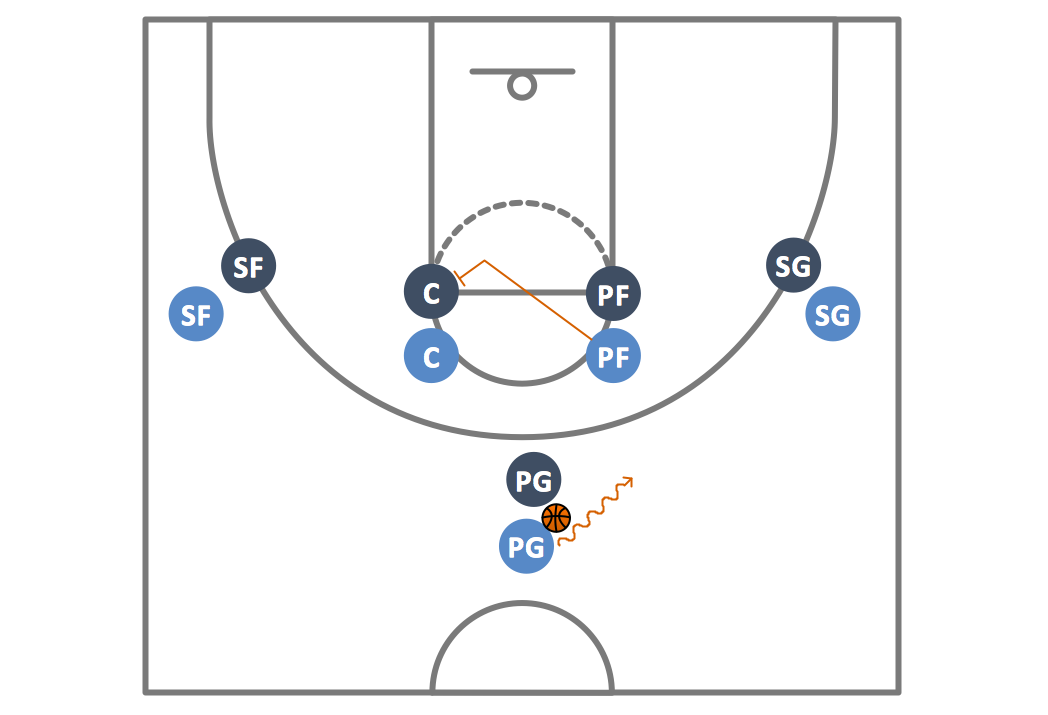
Man-to-Man Defense is the most common defense in the game of basketball. You’ll see it used in every level of basketball from youth league all the way up to the professional leagues.
This defense involves all five defensive players on the court being assigned one opposition player who they’re responsible for defending whenever they’re on defense. Players are often matched up by position, ability, or size. At times, players will be switching or helping on defense assignments but for the most part each player is sticking to defending one player.
2-3 Zone Defense
Zone defenses assign each player defensive responsibility for a certain area or zone, rather than an individual offensive player.
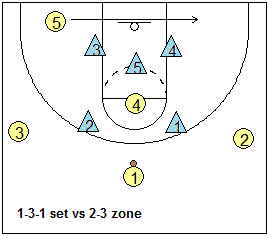
The most commonly used zone defense is the 2-3 zone. In this defense, two defenders guard the top areas of key and three-point area, while three defenders cover the paint and two baseline-to-wing areas.
This defense protects the interior versus strong post players, ensures good corner coverage, and often results in excellent rebounding position.
Pack Line Defense
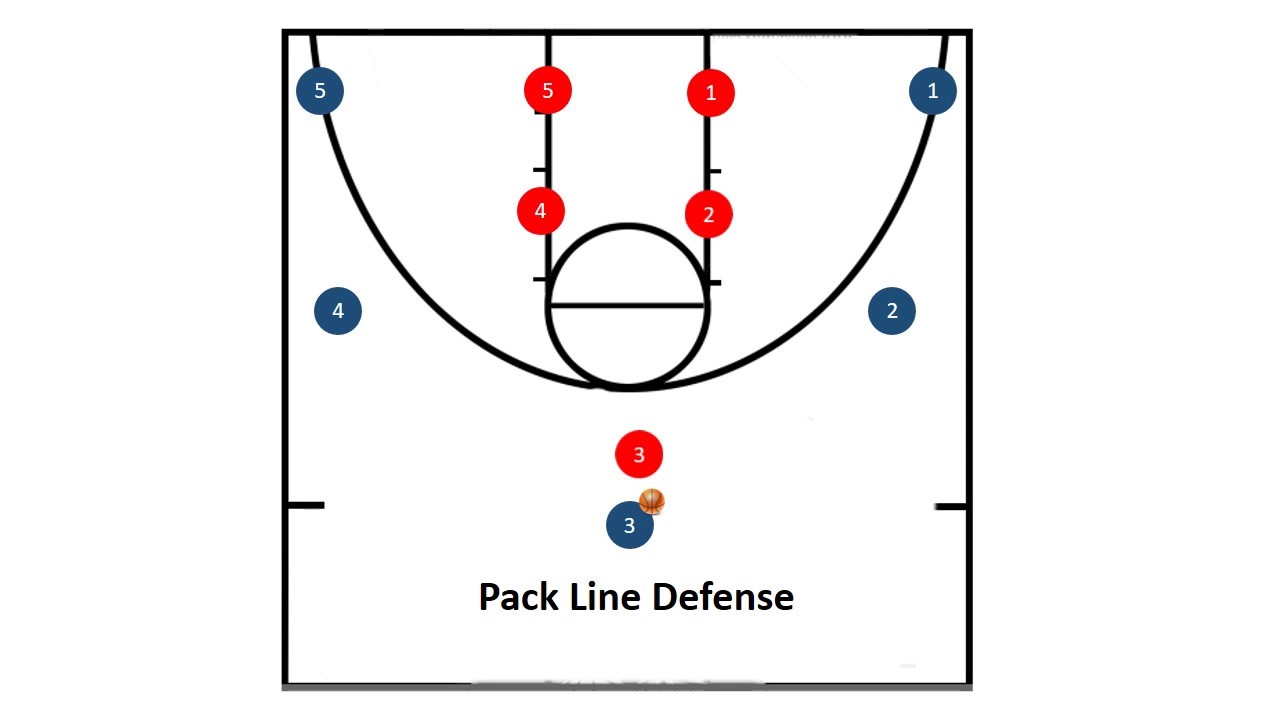
The ‘Pack Line’ defense is a variation of man-to-man defense developed by Dick Bennett for the Washington State University Cougars. The biggest difference between the two is that instead of the off-ball defenders being out pressuring their player and denying the pass, everyone except the player guarding the ball must be inside an imaginary line 16 feet from the rim. This 16ft line is known as the pack line.
1-3-1 Zone Defense
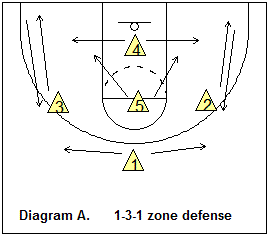
1-3-1 Zone is probably the most versatile zone defense since it is very favorable and conducive to matching up and trapping. In fact, its basic form is the least use. While most zones matchup to the ball, in the 1-3-1 zone, defenders play off and overplay the passing lanes. In playing the passing lanes, it spreads the offense and forces the offense to throw over the defense or extended cross court passes which are vulnerable to interceptions and deflections.
3-2 Match up Zone Defense
The 3-2 match up zone has a similar look to the 2-3 Zone but has a distinctive difference in its goal. The 2-3 is looking to protect the interior, force teams into outside shots, and limit post effectiveness. The 3-2 instead focuses on allowing for quick closeouts to perimeter players and limiting dribble penetration from the outside. The reason why we call this a “match up” zone is that man to man principles still apply other than the fact that players will stay in their zone placement and match up with the offensive player(s) in their area. Players who find themselves on the weak side of the ball will look to shade basket line, help on dribble penetration, and see ball and man to be able to close out to anyone in their assignment area.
Box and One Defense
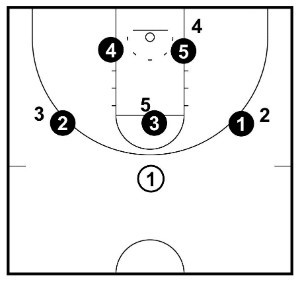
Box-and-one defense is a type of defense used in basketball. The box-and-one defense is a hybrid between a man-to-man defense and a zone defense.
In a box-and-one defense, four players play zone defense, and align themselves in a box protecting the basket, with typically the two larger (or front court) players playing directly under the basket, and the two smaller (or back court) players playing towards the foul line.
The fifth defensive player in a box-and-one defense plays man-to-man defense, typically marking the best offensive player on the other team.
1-2-2 Zone Defense
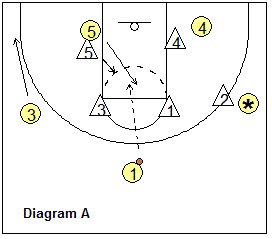
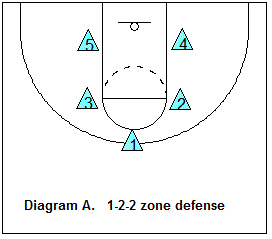
The 1-2-2 Zone Defense would have to be one of the most commonly seen defensive formations within the zone category. The 1-2-2 Zone Defense provides very strong interior defense around the keyway. For this reason, the defense also provides a good initial situation for strong rebounding coverage.
One of the strengths of the 1-2-2 Zone Defense is the positioning of the players off the ball to provide strong help defense if dribble penetration occurs. The player guarding the ball in situations where the offensive player can dribbler to the left or right will always have defenders just behind and on both sides. This makes the 1-2-2 Zone Defense very effective when dealing with a team that has an offense that looks to constantly penetrate off the dribble. Additionally, if a specific offensive player is too strong off the dribble this might be a good defense to utilize as well.
 Ballers