Basketball Drills

Shooting Drills

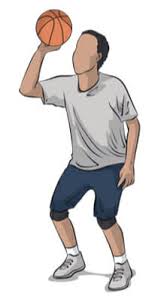
One Hand Form Shooting Drill

Most of you have seen this 1-hand shooting form drill. Even though it is nothing new, don’t dismiss the importance of this foundational drill. This reinforces good technique of the “release” portion of your shot.

For this progression, we focus on getting our feet about shoulder width apart or slightly narrower.

You should be in a strong, balanced position.

Make sure to check your feet and develop consistency on every shot. We prefer to slightly stagger our feet or slightly turn them. The anatomy is different for every one. You need to find what works for you.

Next, make an L with your shooting arm.

Focus on pushing the ball up and out. Your elbow should finish above your eyes.

Focus on pushing the ball through your fingers. Typically, you should either finish with your index finger pointing at the hoop or with your index/middle finger pointing at the hoop. Find what works best for you.

When you properly shoot “up and out” and “push through your fingers”, you will get the proper backspin on the ball.
One Hand Form Shooting Drill – With Guide Hand

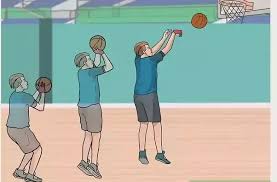
Next, we work on adding the guide hand to the shooting release.

Since athletes have a tendency to use their guide hand, we do not have guide hand touch the ball in this progression.

This is highly important because when you overuse the guide hand, a lot of players will miss to the right and the left. If you can eliminate shooting to the right or left, you will automatically make more shots.
Dribbling Drills

1. Ball Slaps
Continuously slap the basketball from one hand to the other. This is a great drill to start with to get your hands ready for the workout.

2. Straight Arm Finger Taps
While making sure to keep your elbows locked, tap the basketball quickly back and forth straight out in front of you. When you become good at this drill start moving the ball up and down.

3. Wraps – Around Ankle
Wrap the ball around your lower leg/ankles without letting the basketball touch the ground.

4. Wraps – Around Waist
Wrap the ball in a circle motion around your waist.

5. Wraps – Around Head
Wrap the ball in a circle motion around your head.

6. Wraps – Around the world
Involves combining the wraps around the ankles, waist, and head into one drill. Start by wrapping the ball around your head, then bringing it down and around your waist, and finally around your ankles. Then back up to your waist, then head, then waist again, etc.

7. Wraps – Figure 8 Around Legs
Wrap the ball in a figure 8 motion around your legs.

8. Wraps – Around Right Leg
Starting with your right leg in front and your left leg back, wrap the ball around only your right leg.

9. Wraps – Around Left Leg
Starting with your left leg in front and your right leg back, wrap the ball around only your left leg.

10. Wraps – Double Leg, Single Leg
Start with your legs together. Step your right leg forward and circle your right leg with the basketball. Then immediately step back with your right leg so that your feet are together and circle both legs. Then step out with your left leg and circle it before stepping back together and wrapping the ball around them both. Continue this process.
Top 5 NBA Players

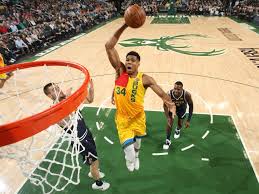
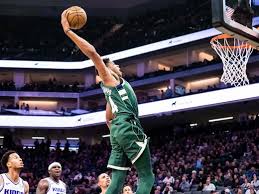
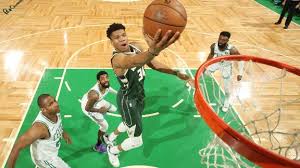
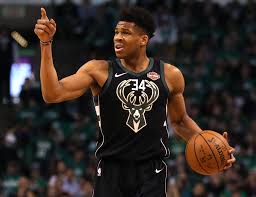
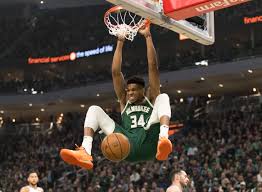
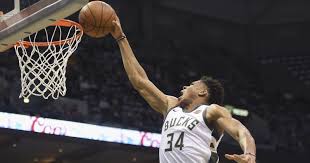
5. Giannis Antetokounmpo

The Greek Freak has become an unstoppable force with an average of 27.7 points per game, 12.5 rebounds per game, 5.9 assists per game, and 57.8% field goal percentage. Antetokounmpo has athleticism in his blood with a height of 6’11, wingspan of 2.21 meters, and a vertical jump of 40 inches! This guy is only 24 years old but he dominates the paint with his eurostep and post moves.

4. Kevin Durant

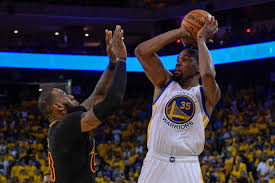
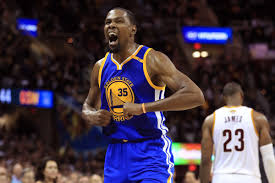
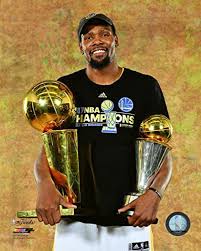
With back to back Final’s Most Valuable Player (MVP), there’s not much more for Durant to prove. He averages 26 points per game, 6.4 rebounds per game, 5.9 assists per game, and 49.3% field goal percentage. Durant has a height of 6’9, wingspan of 2.25 meters, and a vertical jump of 33.5 inches! This guy is unstoppable with his turnaround jumpers.

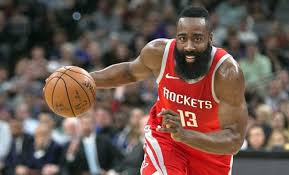
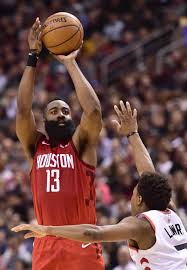
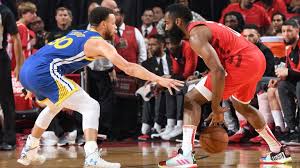
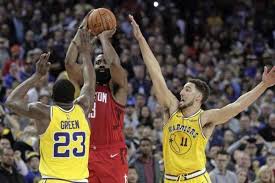
3. James Harden

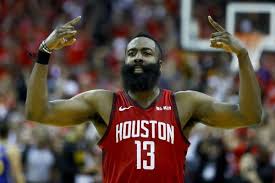
James Harden can’t be compared to anybody in one-on-one. He is so good in one-on-one that he gets a counted foul most of the time. He averages 36.1 points per game, 6.6 rebounds per game, 7.5 assists per game, and 44.3% field goal percentage.Harden has a height of 6’5, wingspan of 2.1 meters, and a vertical jump of 32 inches! This guy is invincible with his signature step-back three.

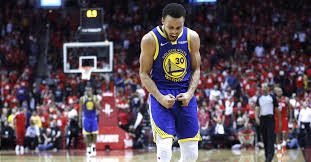
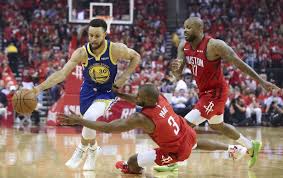
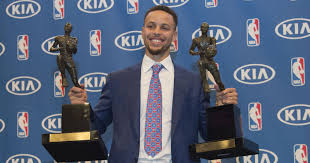
2. Stephen Curry

Curry has 2 MVP regular season title and 4 consecutive finals game with 3 championships. He averages 27.3 points per game, 5.3 rebounds per game, 5.2 assists per game, and 47.7% field goal percentage. Curry has a height of 6’3, wingspan of 1.92 meters, and a vertical jump of 35.5 inches! He is a scoring machine with back-to-back 3s.

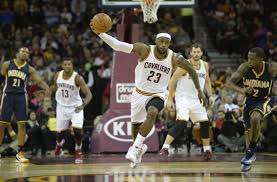
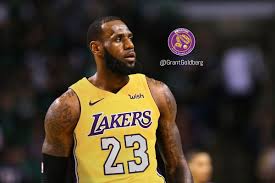
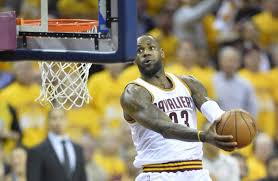
1. Lebron James

Lebron James is 34 years-old which is a grandpa for the basketball world but he never ceases to amaze us and he still dominates the playoffs. He averages 27.4 points per game, 8.5 rebounds per game, 8.3 assists per game, and 50.4% field goal percentage. Lebron has a height of 6’8, wingspan of 2.14 meters, and a vertical jump of 40 inches! He is so strong that they need to double or triple team him every time that he holds the ball and he is unstoppable during transition.

Team Defense

Man to Man Defense

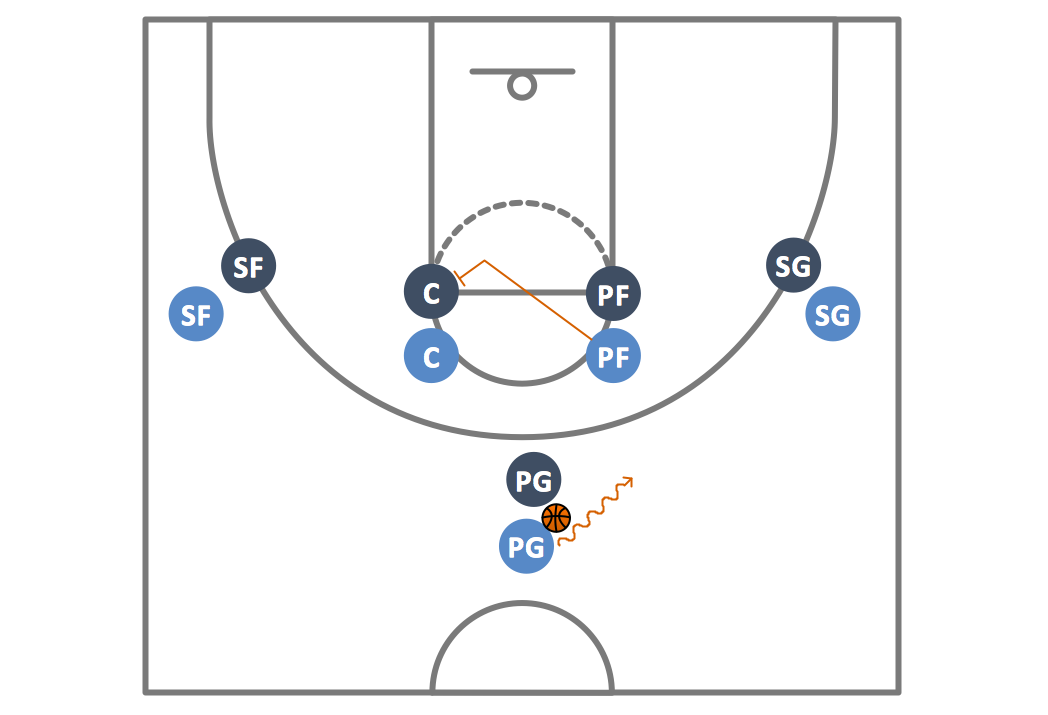
Man-to-Man Defense is the most common defense in the game of basketball. You’ll see it used in every level of basketball from youth league all the way up to the professional leagues.

This defense involves all five defensive players on the court being assigned one opposition player who they’re responsible for defending whenever they’re on defense. Players are often matched up by position, ability, or size. At times, players will be switching or helping on defense assignments but for the most part each player is sticking to defending one player.

2-3 Zone Defense

Zone defenses assign each player defensive responsibility for a certain area or zone, rather than an individual offensive player.

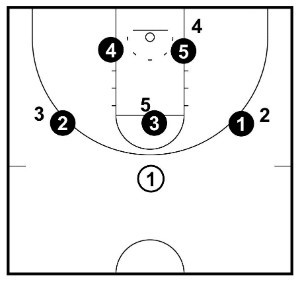
The most commonly used zone defense is the 2-3 zone. In this defense, two defenders guard the top areas of key and three-point area, while three defenders cover the paint and two baseline-to-wing areas.

This defense protects the interior versus strong post players, ensures good corner coverage, and often results in excellent rebounding position.


Pack Line Defense

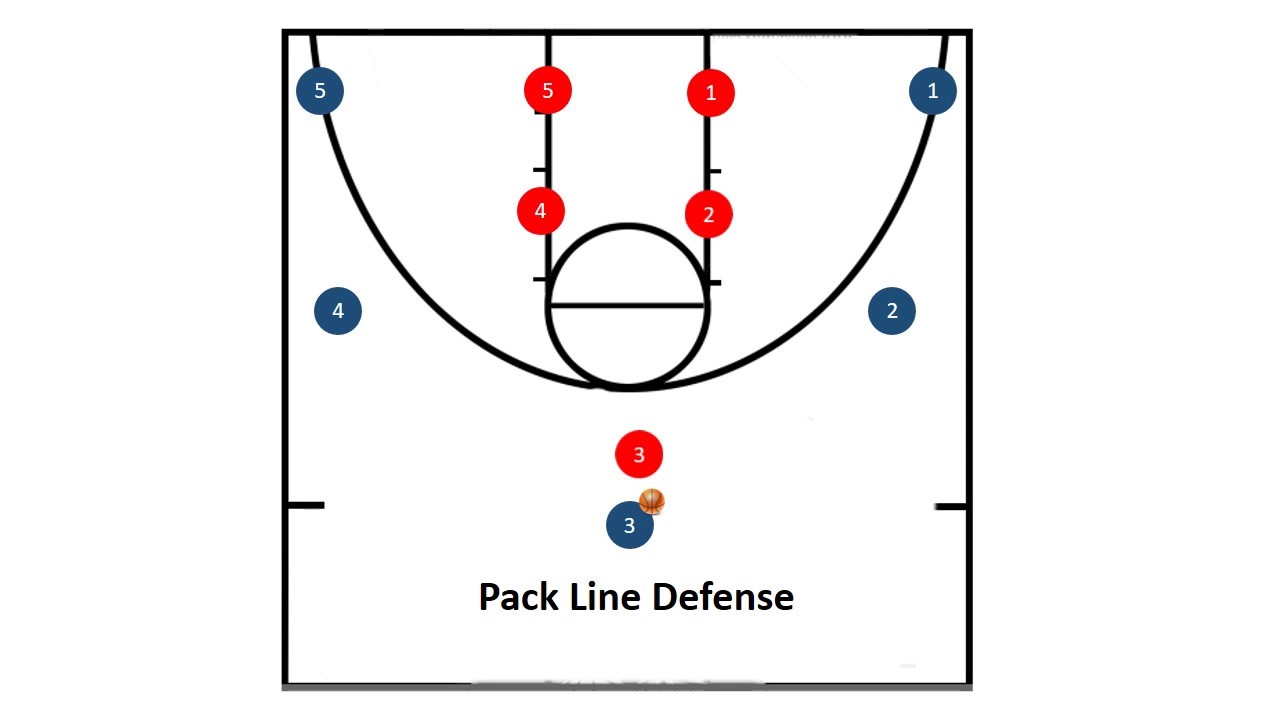
The ‘Pack Line’ defense is a variation of man-to-man defense developed by Dick Bennett for the Washington State University Cougars. The biggest difference between the two is that instead of the off-ball defenders being out pressuring their player and denying the pass, everyone except the player guarding the ball must be inside an imaginary line 16 feet from the rim. This 16ft line is known as the pack line.

1-3-1 Zone Defense

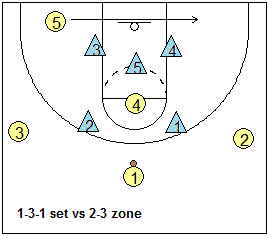
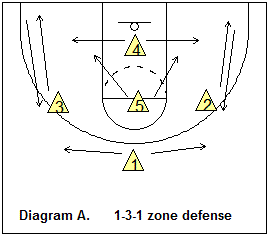
1-3-1 Zone is probably the most versatile zone defense since it is very favorable and conducive to matching up and trapping. In fact, its basic form is the least use. While most zones matchup to the ball, in the 1-3-1 zone, defenders play off and overplay the passing lanes. In playing the passing lanes, it spreads the offense and forces the offense to throw over the defense or extended cross court passes which are vulnerable to interceptions and deflections.

3-2 Match up Zone Defense

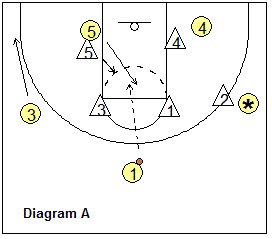
The 3-2 match up zone has a similar look to the 2-3 Zone but has a distinctive difference in its goal. The 2-3 is looking to protect the interior, force teams into outside shots, and limit post effectiveness. The 3-2 instead focuses on allowing for quick closeouts to perimeter players and limiting dribble penetration from the outside. The reason why we call this a “match up” zone is that man to man principles still apply other than the fact that players will stay in their zone placement and match up with the offensive player(s) in their area. Players who find themselves on the weak side of the ball will look to shade basket line, help on dribble penetration, and see ball and man to be able to close out to anyone in their assignment area.
Box and One Defense

Box-and-one defense is a type of defense used in basketball. The box-and-one defense is a hybrid between a man-to-man defense and a zone defense.

In a box-and-one defense, four players play zone defense, and align themselves in a box protecting the basket, with typically the two larger (or front court) players playing directly under the basket, and the two smaller (or back court) players playing towards the foul line.

The fifth defensive player in a box-and-one defense plays man-to-man defense, typically marking the best offensive player on the other team.


1-2-2 Zone Defense 

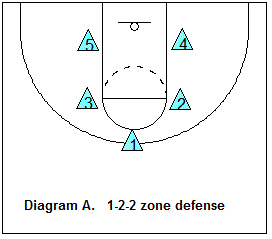
The 1-2-2 Zone Defense would have to be one of the most commonly seen defensive formations within the zone category. The 1-2-2 Zone Defense provides very strong interior defense around the keyway. For this reason, the defense also provides a good initial situation for strong rebounding coverage.

One of the strengths of the 1-2-2 Zone Defense is the positioning of the players off the ball to provide strong help defense if dribble penetration occurs. The player guarding the ball in situations where the offensive player can dribbler to the left or right will always have defenders just behind and on both sides. This makes the 1-2-2 Zone Defense very effective when dealing with a team that has an offense that looks to constantly penetrate off the dribble. Additionally, if a specific offensive player is too strong off the dribble this might be a good defense to utilize as well.
Basketball

What is Basketball???

Basketball is a game played between two teams of players each on a rectangular court, usually indoors. Each team tries to score by tossing/shooting the ball through the opponent’s goal, an elevated horizontal hoop and net called a basket.

History

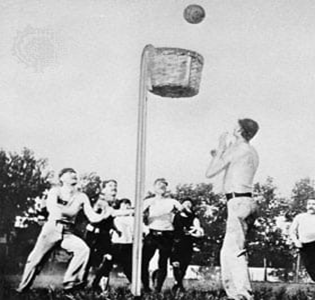
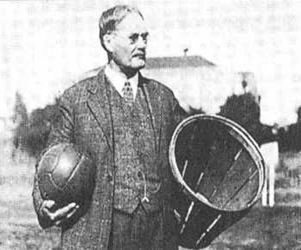
The game of basketball as it is known today was created by Dr. James Naismith in December 1891 in Springfield, Massachusetts, to condition young athletes during cold months. It consisted of peach baskets and a soccer style ball. He published 13 rules for the new game. He divided his class of eighteen into two teams of nine players each and set about to teach them the basics of his new game. The objective of the game was to throw the basketball into the fruit baskets nailed to the lower railing of the gym balcony. Every time a point was scored, the game was halted so the janitor could bring out a ladder and retrieve the ball. After a while, the bottoms of the fruit baskets were removed. The first public basketball game was played in Springfield, Massachusetts, on March 11, 1892.

Basic Rules

            MAIN DIFFERENCES 3X3 VS 5V5

RULE 3X3 5V5
HOOP 1 2
COURT HALF FULL
PLAYERS 3-A-SIDE 5-A-SIDE
BALL 3X3 5V5
PLAYING TIME 10′ 4 X 10′
GAME OVER 21 PTS N/A
SHOT-CLOCK 12″ 24″
FIELD GOALS 1 OR 2 PTS 2 OR 3 PTS
AFTER SCORING NO BREAK INBOUND

Violations

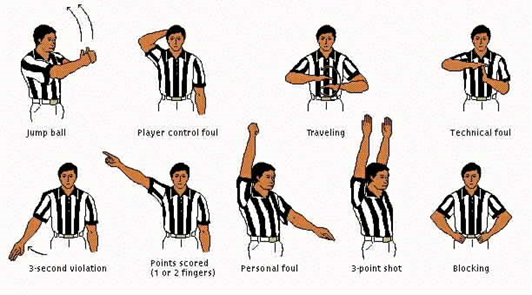
The following violations result in a change of possession:

24-Second Violation – teams must attempt a shot within 24 seconds.

Three in the Key – An offensive or defensive player cannot remain in the lane (key) for more than three seconds at a time.

Double Dribble – A violation in which a player dribbles the ball, stops, then begins to dribble again.

Charging – A violation in which an offensive player runs into a stationary opponent.

Travelling – A violation in which a player takes too many steps without dribbling the basketball.

Eight-Second Violation – After a basket, the offensive team has eight seconds to get the ball over midcourt.

Lifting – A violation in which a player moves his hand under the ball and scoops it while dribbling.

Goal tending – When a defensive player interferes illegally with a shot on the rim or on a downward path to the hoop; the shot is assumed in and the offensive team receives the basket.

Mechanics

Fouls

Personal fouls occur when defenders make illegal contact with their opponents. If an opponent is in the act of shooting, free-throws are awarded. In high school and college, five personal fouls warrants an ejection, while professionals may commit six fouls before being disqualified. Technical fouls generally occur when a player behaves with unsportsmanlike conduct. In the NBA and college, the opposing team is awarded one free throw and possession of the ball. If a player draws two technical fouls, they will be ejected. Finally, two types of flagrant fouls exist. Type 1 is for either exceptional or excessive contact. Type 2 is when the contact is both exceptional and excessive. In both cases, the opposition receives two free throws and possession afterward. Disqualification occurs after two type-1 fouls or one type-2 foul in the NBA.

Scoring

Each basket made in front of the three-point line is awarded two points. Baskets from behind this line are awarded three points. You also receive one point for each made free-throw — taken without interference from the free-throw line. If you are fouled in the act of shooting from the two-point range, you will receive two free-throws. If you were fouled when shooting beyond the three-point line, you will receive three free-throws. If you make the basket while being fouled simultaneously, that basket will count and you will receive one free-throw.

Dribbling Mechanics

The proper mechanics for dribbling a basketball require that you keep the ball low and close to your body in order to make it as difficult as possible for the defender to steal the ball. Spread your fingers out wide and attempt to dribble with just your fingertips for greater control. Once you pick up your dribble, you are allowed two steps and are not allowed to dribble again. Taking more than two steps will result in a traveling violation, while dribbling again will result in a double dribble. The consequence of each offense is that the opposing team will be awarded possession.

Shooting Mechanics

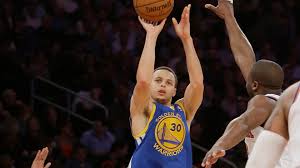
To properly shoot a basketball, have your feet shoulder-width apart and pointing directly toward the basket. Your shoulders should be squared to the basket as well. Your lead foot should be just in front of the other and in line with the basket. The elbow of your lead hand should be in line with this foot as you raise the ball to shoot. This will help assure that the ball will follow the direction of your foot and elbow, which should both be directly in line with the basket. Place your weak hand on the side of the ball during your shooting motion for greater stability prior to your release.